Pharmaceutical Laser Drilling with NIR Inspection

Improving the Safety of Controlled Release Products

How Do Controlled Release Products Work?

Most people think that pharmaceutical tablets are coated simply to make them more visually appealing or to improve their taste. While this may be true of most sugar, gel and film coated tablets, when it comes to controlled release products, there is an additional layer beneath the outer coating that is critical to the safety and integrity of the drug.

The osmotic-controlled release oral delivery system, or OROS, is an advanced timed release mechanism usually in the form of a bi-layer tablet with a semi-permeable outer membrane. This membrane coating is made from an organic plastic-like material, usually cellulose acetate, and is commonly referred to as an enteric coating. This coating does not dissolve in the stomach, and retains it’s integrity until it reaches the intestines.

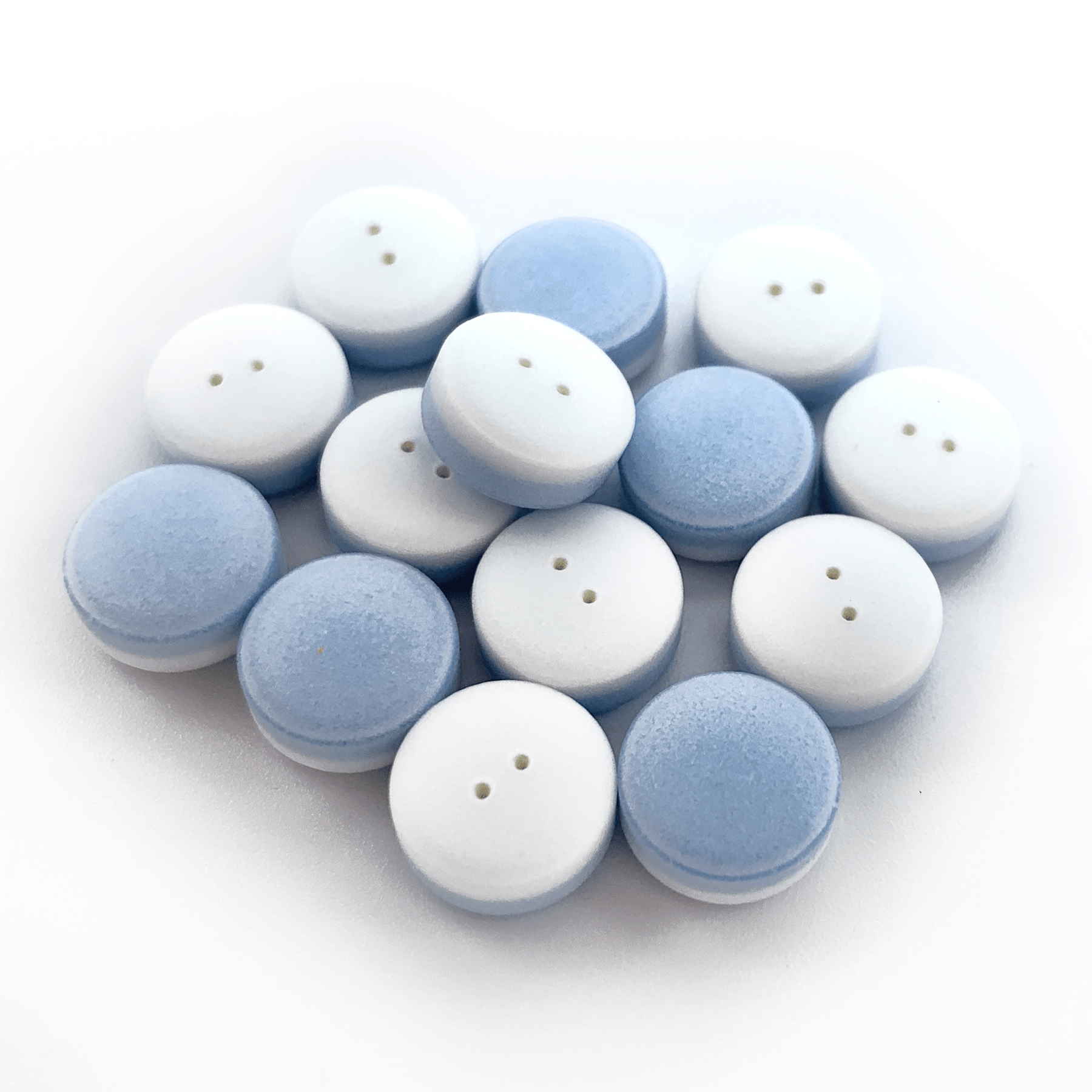
Multi-layer enteric coated tablets are formulated to have different colors on each side of the tablet. The lighter colored side is usually the layer that contains the drug, and the darker colored side is called the push layer, which contains a material that expands in the presence of moisture.
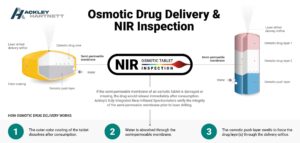
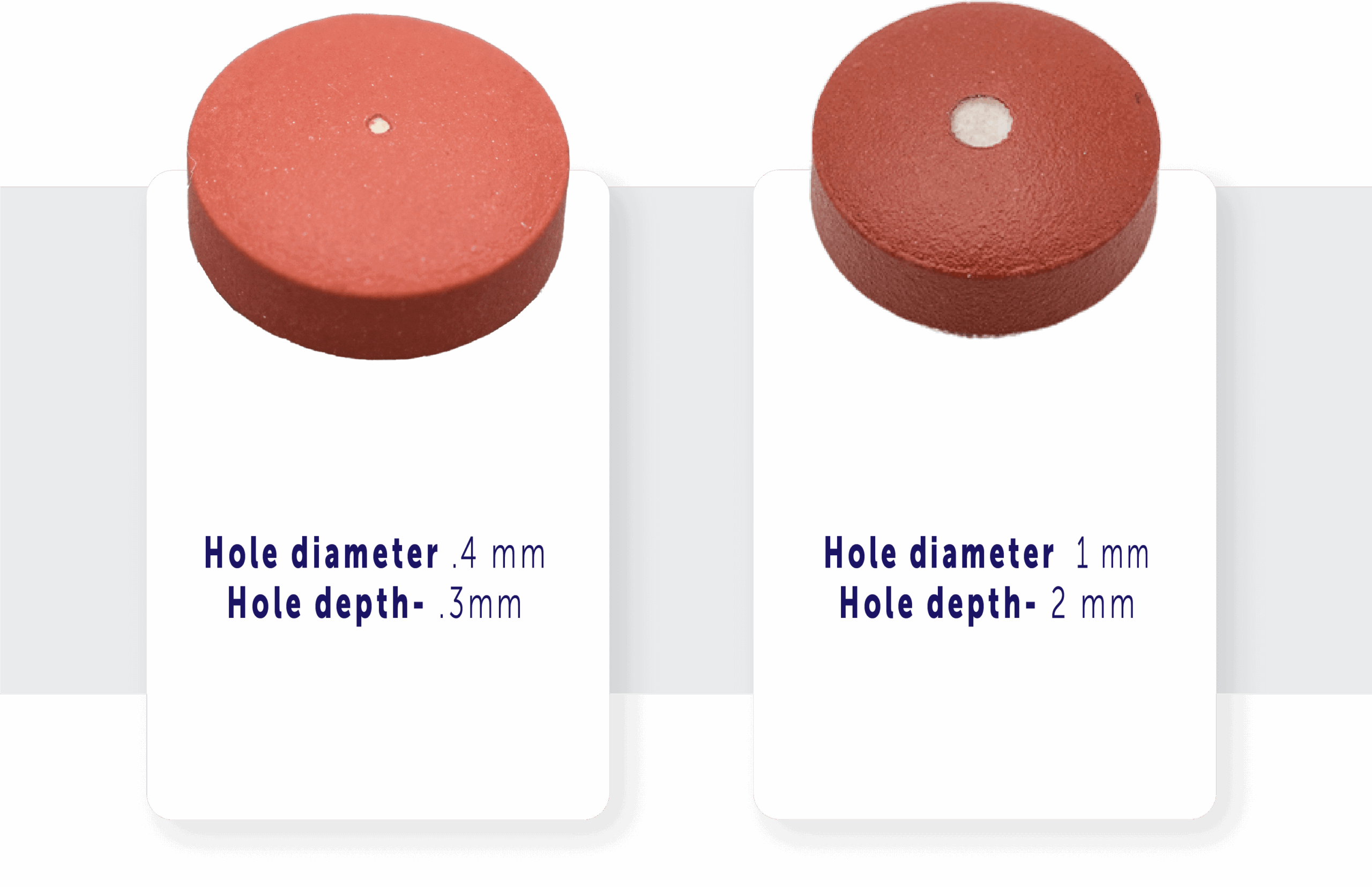
image explaining how osmotic drug delivery works

Two red circular objects with small central holes, resembling oral solid dosage forms, are shown. The left object has a 4 mm diameter, 3 mm deep hole; the right has a 1 mm diameter, 2 mm deep hole. Specifications are written below each object.

In order to create a timed-release mechanism, a precision laser is used to drill a submillimeter- sized aperture into the drug-side layer of the tablet. As the tablet passes through the body, water is absorbed through the semi-permeable membrane via osmosis, and the resulting osmotic pressure pushes the active drug through the drilled opening (s) on the drug side layer of the tablet. The diameter of the drilled hole determines the rate at which the drug will be released ( 8 hour, 12 hour, etc.)

NIR Inspection for Tablet Production

NIR inspection provides a quick and accurate way to verify that a tablet’s enteric coating is acceptable and therefore safe for consumption.

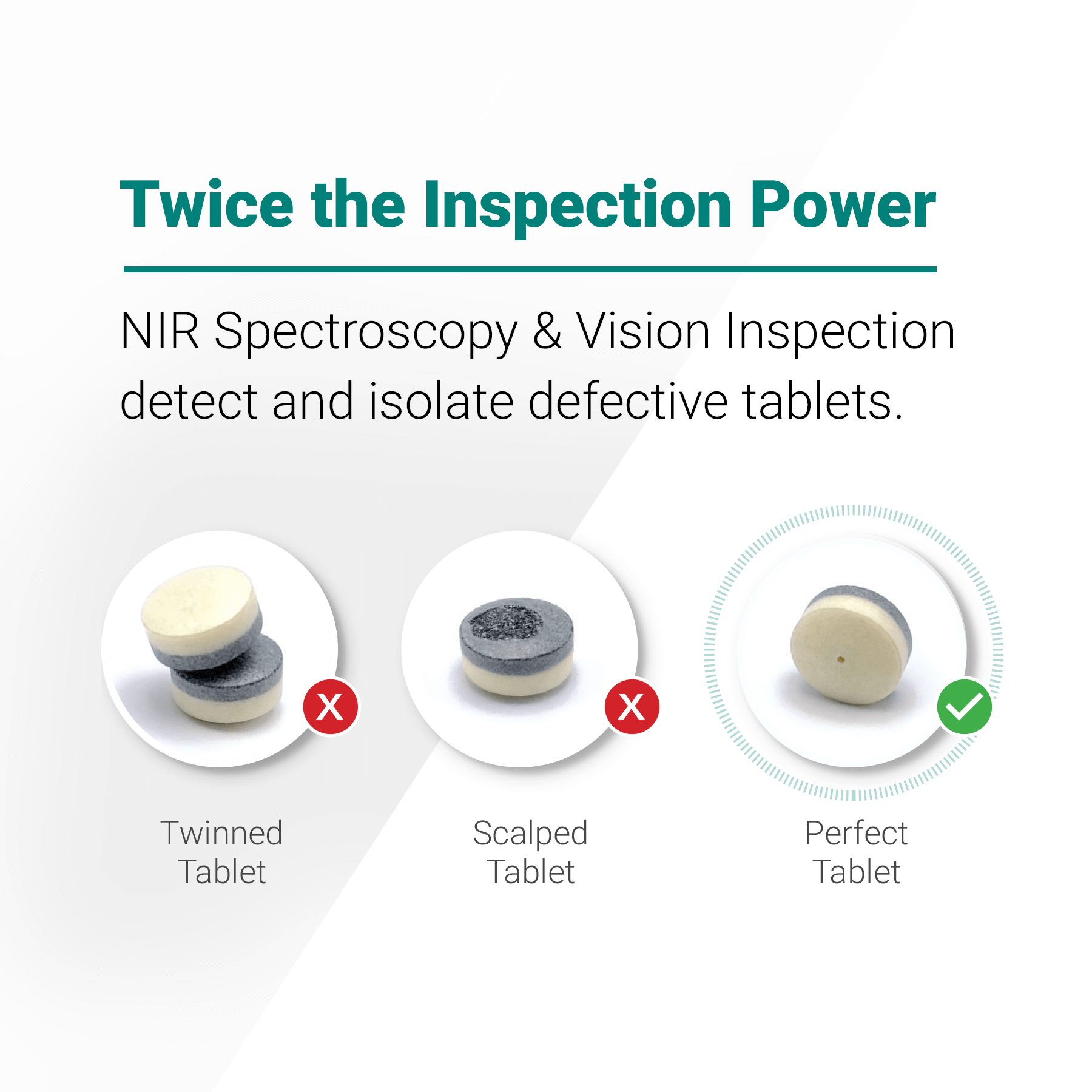
If the enteric coating of a controlled release tablet is even slightly damaged, the drug might release immediately after ingestion, which could be very harmful, or even fatal, to the consumer. Occurring at the near-infrared wavelength of light, NIR inspection provides information about a material’s composition by performing a physical and chemical analysis. A material signature is then generated and can be plotted to show peaks at specific wavelengths of light. This type of inspection is capable of determining if an enteric coating is present on the tablet, and if there are any significant defects in the coating such as chips, cracks, contamination, problems with texture and intactness, etc.

NIR Inspection is a valuable tool for producers of controlled release pharmaceutical products. It gives additional peace of mind by providing an extra layer of inspection that is fast, non-destructive and does not require expertise or training in sample preparation to perform.

Did you know?

Near infrared spectroscopy (NIRS) uses the nearinfrared region of the electromagnetic spectrum which ranges from 780 nm to 2500 nm. Typical NIRS applications include analysis of food products, pharmaceuticals, combustion products, and a major branch of astronomical spectroscopy.

link to Ackley Hartnett
ackley hartnett logo with white background

Learn More About Our Laser Drilling Machines

Get connected with our sales team.

Contact Us

Other Posts by Ackley Hartnett

Back to Top